I can finally check this off of my list of things to do during my life... I went to AMSTERDAM!!!!
Monica and I spent a weekend there just before school started again, and if there's one thing that struck me about Amsterdam, it's that all the rumors are true.
Don't get me wrong, Amsterdam is rich in culture and history and it has a quaint port city ambiance, but like most port cities, it also has a shady side, and some of the things I saw... wow.
But I learned so much that weekend too! First of all,
- in Amsterdam, they speak Dutch officially, but there is English EVERYWHERE. I know a huge reason why is because Amsterdam attracts a lot of English-speaking tourists, but even the Dutch language is similar to English. For instance, the train station we arrived at (below) is called Centraal Station. I definitely did not need a translation for that.
 By the way,when I say the language is similar to English, I mean only the written part. I can usually pick out some of the basic words of a new language when I hear it enough, but I couldn't understand anything they were saying! Everything sounds like it has a "-en" suffix. (Floogen dunken merg!)
I'll go ahead and let you know now that this is a long post because there is a LOT to talk about. So to make it NOT seem like a huge run-on sentence, I'll break it up into sections (in true Sciences-PO style!... at Sciences-PO, everything is divided into sections). This way, you can skip to the parts that interest you the most if you want to save time. :)
So here are the parts:
- About the strangely contradictory hostel we stayed in
- Canals, and why Amsterdam is called the "Venice of the North"
- The Dutch food we tried... lots and lots of bollen!
- That Dam square and all the Dam tourists
- Kevin-the-tour-guide and some cool and random Amsterdam facts
- Beer and the windmill
- The Red Light District
- Amsterdam nightlife
Alright! Here we go...
1. About the strangely contradictory hostel we stayed in...
 We stayed in a Christian youth hostel in the Red Light District.
Yes, you read that correctly. It's run by a group of kids around my age and it was a pretty good deal considering that breakfast and all linens were included in the price. The downside was that you absolutely HAD to be inside the hostel by 2am or else you get locked out until 7am.
But the best part about it was the funny paradox that you have a Christian hostel, which enforces a strict policy on alcohol and curfew, in the Red Light District!
 This was where Monica and I slept! I got the top. :)
 This was the common area. They really liked reinforcing the fact that it's a Christian hostel. The only reason why this is so funny to me is because there are working Red Light windows not even 50 feet away from the hostel... ha ha!
~~~~~~~
2. Canals, and why Amsterdam is called the "Venice of the North"...
One if the major things I heard about Amsterdam before coming was that it's considered to be the "Venice of the North" because of the canals. Well the "Venice of the North" label is subjective, but it definitely has merit if only because there are canals everywhere.
 Canal next to buildings!
 Canal with boats!
 Canal next to more buildings!
 Canal with a lamppost and a windblown Samantha!
(I remember it being windy that day)
 Canal with a clock tower! There were these canal clock towers sprinkled throughout the city.
 Canal in sepia! (Credit for this beautiful picture goes to Monica.)
 Canal at night on the border of the Red Light District!
Canals, canals, canals! Now on to the food!
We tried different kinds of traditional Dutch food, starting with...
~~~~~~~~
3. The Dutch food we tried... lots and lots of bollen! ...
3. The Dutch food we tried... lots and lots of bollen! ...
We tried different kinds of traditional Dutch food, starting with...
 ...Vlaamse Frites! When we first came out of Centraal Station and walked down the main tourist area, this caught our attention: it's basically just french fries, but served in a paper cone with any toppings you want (most people get mayonnaise).
 It was pretty good if you're out and hungry and need something to hold you over until dinner. Unfortunately, we found out later that the Vlaamse Frites are more of a tourist treat than a Dutch specialty. Oh well, we gave it a chance anyway.
Dutch food #1: Something - bollen! :D
 As for the REAL traditional Dutch food, we were told to try these fried ball things (I wish I remembered the name- it goes something... bollen) and the pea soup. So here's Monica trying out some Dutch bollen...
Dutch food #2: Lentil Soup!
 ...and here's some lentil soup I ordered! I couldn't find pea soup on the menu so I ordered the next best thing. Still yummy though!
Back to the Dutch food #1:
 Here's a plate of that same bollen stuff but from a nicer restaurant. I think what you're supposed to do is eat it like a sandwich with some mustard.
- Another thing I learned about Amsterdam: food there is definitely less expensive than in Paris! A good cappuccino like the one in the picture costs about 2,20EUR in Amsterdam and more like 5EUR in Paris!
 This was the restaurant we went to to get the good Dutch food!
 And this is inside the restaurant! I liked how it resembled an old library.
Dutch food #3: Oliebollen!
 Here's another bollen but for desert! I actually remember the name too: Oliebollen! It's basically a donut with powdered sugar, similar to donut holes in the US. It was so simple, and really really good. And who knows, maybe the Dutch are the founders of donut holes!
 And here's the stand we got the oliebollen from! There were other stands with other pastries too, like apple bollen and whatever fruit-filled bollen, but we stuck to the oliebollen.
 See I'm not lying, they call it bollen!
Duthc food #4: Proffertjes!
 These are called proffertjes (don't ask me how to say that), and we saw them everywhere! Again, just a simple concept of taking a regular sized-pancake and shrinking that to be bite size! It's more fun this way I think!
 Monica having fun with the proffertjes!
Now about the main area of Amsterdam!
~~~~~~~~4. That Dam square and all the Dam tourists...
This is called Dam Square, and all I know about it is that it's huge and you meet here for a tour of the city, and if you want good food and souvenirs, stay as far away from here as possible because it's a big touristy area too.
 Here's a panorama of the square.
 Here's a close up of some of the main buildings!
 Monument for those who died in the World Wars. Also the meeting spot for a tour that Monica and I went on.
 Look at the Dutch on the building! :D
 This is the long street connecting Dam Square to Centraal Station (you can see the station in the distance). Major tourist area. Not the place to go for authentic Amsterdam culture.
 We found a wooden shoe to sit in! That was the best part in my opinion.
~~~~~~~~
5. Kevin-the-tour-guide and some cool and random Amsterdam facts...
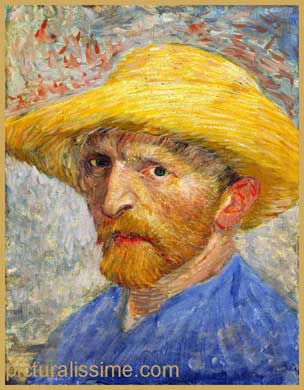
As I said before, we took a tour around Amsterdam, and this is probably where I learned most about the city. I think the best part about the tour was our guide, Kevin. Kevin-the-tour-guide was actually from Boston, but he studied abroad in Amsterdam and ended up not going home (don't worry, that won't happen to me!) and hosting tours instead. What makes Kevin-the-tour-guide exceptionally cool is the fact that he looks exactly like Van Gogh, down to the beard and hair color. He even wears a Van Gogh straw hat on his tours to add that extra flair to it.
 Kevin-the-tour-guide! See? If you didn't know any better, you'd think he was Van Gogh!
Like I said, we learned a TON of cool things about Amsterdam on this tour...
 Kevin-the-tour-guide! See? If you didn't know any better, you'd think he was Van Gogh!
Like I said, we learned a TON of cool things about Amsterdam on this tour...
 Amstel River.
- According to Kevin-the-tour-guide, the Dutch are very straight forward when it comes to naming things. For example, since the Amstel River was such a major part of the city, being the entry to the ocean, they named the city after the river. Amstel --> Amsterdam.
- Another thing about the Dutch: they are very tolerant and accepting of all types of people and what people do. Because of this, it's easy to get away with breaking laws here and there. As long as you're not bothering anyone and their children, you can do almost anything you want in Amsterdam. But they do have laws, which were meant to be respected, so it's best not to push boundaries. You never know when it'll be too much, and there are always tourists claiming ignorance, but that never really works.
- Kevin-the-tour-guide uses a phrase to describe the Dutch mindset: plausible deniability. It basically ties back to the culture of tolerance in that the Dutch can easily ignore laws by finding a loophole that doesn't bother anyone. For instance, vendors are not allowed to sell alcohol in certain theaters in the Red Light District. To get around this, they sell you the ticket for the show, and you can choose to buy a glass as well. No alcohol, just the glass. But if you do buy the glass, it comes with complimentary beer for the duration of the show. Anyone can see through the scheme, but they deny that anything odd is going on because it's plausible. And it doesn't directly harm anyone. Plausible deniability.
 This is a party bus! You can't see it too well but this is actually a huge bar on wheels that you pedal like a bike. Each person has his or her own set of pedals and you're supposed to keep your feet going as you drink. But don't worry, on every party bus there has to be one person who is not drinking. Hopefully that person has control over the wheel!
- Kevin-the-tour-guide warned the guys on our tour against drinking early in the afternoon. The reason why is because if they start drinking early, they'll keep drinking until later that night, so by the time all the good bars and night clubs open, they won't be able to stand up and won't be allowed inside. Even the ladies of the Red Light District won't take them as clients because it looks bad for business and it's unsafe for them. Ha ha, who knew?
 Bike parked next to a canal!
- Bikes in Amsterdam are dangerous because the people riding them will NOT stop for you and they go fast and you're only warning before being run over is a little bike bell! And they're everywhere! There are more bikes in Amsterdam than people walking around, and the one crime most often committed in the city is bike theft. (Kevin-the-tour-guide said he went through 3 bikes last year!)
- I was almost bike roadkill at least 3 times that weekend!
- About the canals... they're filled with trash! The bottom layer is bikes (yes, bikes!), the middle layer is general debris, and the top layer is water. :P
- Why there are bikes in the canals: when the bikes break, people get so frustrated that they just throw them over the edge. Plus, it's cheaper to buy a new bike than to get it fixed, so broken bikes don't last long in Amsterdam!
 Amsterdam buildings! You can see the typical architecture on the top (the white border and how there is a single window in the middle of the top floor).
- By the way, if the buildings look slightly crooked, that's because they are. The city was built over mud and over time, the buildings started to tilt. If the houses are standing side by side, then they support each other's weight, so there's no real problem. But if the house tilts out into a street like the one in the picture, they eventually have to do something before the building collapses entirely.
 Here's another building with the typical roof design! See how this one is tilting forward? ...
- That was done on purpose. Before elevators, if you had to haul something up to the top floor, you could either drag it up several flights and hope it fits through the hallways, or you could attach it to a pulley outside and pull it up through the window (if you look closely, you can see the pulleys sticking out the top of the roof). To make things easier, they built the houses tilting forwards so the objects wouldn't slide over the front facade. This was of course before they realized that you could just extend the pulley out a few feet to avoid the hassle of designing a front-tilting house... ha ha!
 Here's a close up of the pulley systems!
 More buildings with the roof design and the pulleys!
 The thinnest house in Amsterdam... it's really only one window wide!
- This goes back to how Kevin-the-tour-guide said that the Dutch like finding loopholes in every law. In fact, when the city started imposing taxes based on the width of your house, this is how the Dutch got by paying less to the government!
 Niewmarkt Square and the castle-building in the center!
(It's not really a castle, but it looks like one!)
- Everyone knows the Dutch have a glorious history as traders, and way back when, this building was like the customs for everyone passing through Amsterdam.
- One of the reasons for the success of the Dutch East India Company was that they traded spices and didn't bring missionaries along with them, unlike other European countries. Thus, the merchants in the East wouldn't get annoyed with them, leading to the Dutch being the only Europeans back then with access to spices. And that's why everyone else started going to the Dutch when it came to trade.
- Another reason for their success: the logo. The Dutch created a logo for their company to put on the crates of goods so that the Eastern merchants would immediately recognize who they were. This eventally led to the idea that logos go with nicer products. As Kevin-the-tour-guide would say, "the Dutch had simple ideas... they were just the first to use them."
 Bloedstraat = blood street!
- Niewmarkt Square wasn't just for trading. They also used to hold public executions in front of the castle, and when Amsterdam adopted the French guillotine as the instrument of choice, it produced a lot of blood. Legend says that because of the incline from Bloedstraat to Niewmarkt Square, the blood washed this street red, contributing to its name.
Here's a video of Kevin-the-tour-guide and Niewmarkt Square! In the video, he's giving us tips on where to go eat in the area:
After Niewmarkt Square, we went inside a former convent, which today is like a retirement home for women.
 This is the church in the middle of the convent.
 Dutch nun statue!
 This was the courtyard. Nice place to retire!
 Next we saw some Dutch paintings in this mini-museum! Before, this used to be just an alley between two buildings, but they added glass and created a holding place for some fine art!
 Here's one of the Dutch paintings!
- If you were going to be in a group portrait way back when, you had to be prepared to pay the price. The more you paid the artist, the more flattering your features, the more central and large your figure was compared to the others. If you couldn't afford all of that, your figure was in the background, barely noticeable. And if you were a jerk to the artist, your face somehow came out looking distorted.
 This is the crest of Amsterdam! (There's another picture at the beginning of this post too)
- The 3 X's on the crest were an ancient way of identifying knights. If you had 3 of them, you were from Amsterdam. If you had 2 or 5 or however many X's, you came from somewhere else in Holland.
 Old-fashioned house plate things!
- These were another former way to identify people. Every house had a plate on the side with an engraved picture and a short description of what you do so the town knew who you were in society. For example, my house would have had "Samantha the student" on it and a picture of a bunch of books or something.
 Close-up of a house plate thing!
 If you saw Oceans 12 you should recognize this... they filmed a scene in this coffeeshop (the one where George Clooney and Brad Pitt are talking to this guy in this weird cryptic prose and Matt Damon doesn't follow so he ends up insulting the guy by rhyming about the sun...ha ha).
 Pee deflector!
- This is a way to maintain cleanliness and the city's form of a practical joke all in one! To prevent intoxicated males from peeing in corners of the city's cherished buildings, they designed these pee deflectors to splash the urine back onto the guy's shoes and clothes. The only bad thing is that the pee deflectors have evolved into less of a urine deterrent and more of a fun challenge after a few rounds at a bar- there are now only endless attempts to conquer the deflectors by aiming in just the right way!
 Kevin-the-tour-guide explaining a shocking pee deflector. This one was designed a little differently. First of all, there's an inclined metal plate to lead the urine back to you when you attempt to relieve yourself, so you end up getting wet all over your pants and shoes. If that's not bad enough, the spikes have electric currents running through them to give you a little jolt, which is amplified by the fact that you just wet yourself. Ouch.
 Anne Frank House! This is where her family hid during the War and where she wrote her diary.
By the way, if you happen to be in Europe right now and you think you'd be interested in taking a tour like this (it was free too), you should check the website to see which cities they have tours in: Free Tours ... I definitely recommend it! :)
~~~~~~~~
6. Beer and the windmill...
Now for some beer! Kevin-the-tour-guide gave our group a really nice tip to check out this one brewery in Amsterdam that serves very good beer and that gives free tours every day at 4pm. We missed the tour that day, but we still had a great time trying the beer!
 The brewery is just behind the only windmill in Amsterdam.
 Me and Monica with the windmill!
 One more time!
 Inside the brewery! They had every kind of beer imaginable! 99 bottles of beer on the wall...
 Take one down, pass it around....
 Cheers to the brewery!
 Cheers to Amsterdam!
 We got just a regular house beer (I have no idea what it was called... maybe beer-gen flah-gen something ha ha), but it was really rich and definitely stronger than beer from the US.
 So yummy! (the beer... ha ha) It was a pretty good deal too- I paid 1EUR-something for that glass!
 Monica enjoying her Dutch beer!
Here's a video of us enjoying ourselves and explaining the surroundings!
And yes, it was Monica's birthday the Monday after we got back to Paris, so we decided to dedicate the whole weekend to her turning 22!
 This picture was my attempt to show you how tall the Dutch are. These guys must have been at least 6'5''. We found out that the Dutch in general are naturally the 2nd tallest people in the world, averaging around 6'1''- 6'2''. That includes women.
 This was the name of the brewery. I have no idea how to even start to pronounce that!
Here are some things I found walking around on the street...
 This is for you, Hunter!! (It's a coffeeshop, by the way.) :P
 Quaint little Dutch shop!
 Part of Amsterdam's Chinatown! It's actually a temple!
 Small street!
 Another small street!
~~~~~~~~
7. The Red Light District...
(I bet you scrolled down to this section, ha ha...)
(I bet you scrolled down to this section, ha ha...)
 Besides the glowing red lights in the windows, how do you know where the Red Light District begins and ends? They have these little traffic lights on the street corners as a little warning. So no "well I didn't know I was in the Red Light District" excuses!
 They have these metal stumps too, indicating the same thing.
Everyone knows what's in the Red Light District, but while we were visiting, we learned some pretty interesting facts about the ladies in the windows...
- First of all, you won't see any pictures of the women on my blog, or probably anywhere for that matter. It's strictly prohibited to take pictures of them, and they definitely enforce that law. There are cameras on every street corner watching you, and if you do decide to sneak in a picture, you could have a variety of punishments, including having the girls open the window to throw foul things at you, having your camera smashed, or even having it thrown into the canal. So the best thing to do is to not even try.
- Prostitution is definitely recognized as a legitimate profession in Amsterdam. The women pay taxes, they have a union, and the government provides them with excellent healthcare benefits.
- Even though the women have access to as many health exams as they want, they are not obligated to get tested at all, because their clients don't have that obligation. But most of them still take advantage of the exams, and some even display their test results as a way to advertise to their clients (kind of like how restaurants display the good scores from the health inspector).
- The women are self employed and they rent out the windows depending on when they want to work. The rent of each window depends on the pedestrian traffic in front of it, whether or not they rent it during the day or night, if it's a weekend, etc.
- Some of the ladies are paid very well. Obviously, the better-looking a girl is, the more business she gets, and the more she earns. We heard that the best-paid ladies can earn even 6-figure incomes.
- As far as the demographics go: the majority of the women are from Eastern Europe, and a little over half of their clients are British.
 This was right in the heart of the district, and to the left is a former church. It does seem a bit odd that you'd have legal prostitution happening within a 100 meter radius of a church, but we learned that it has to do with Amsterdam's history as a port city:
- When sailors came into port after long months out to sea, they typically indulged themselves with the women in the area around the church. Since most of the sailors had wives back home though, they felt horribly guilty right afterwards and found it very convenient to have a church nearby so they could go confess their sins and pay indulgences to reclaim their rights to heaven again. They often spent all their earnings on the women and the indulgences from the church because there was always the threat of imminent death on the open ocean, so saving their earnings wasn't practical.
- Yes, men do work in the windows in the Red Light District, but only dressed as women. However not too long ago (within the decade I think), Amsterdam held a widely-publicized social experiment in which they opened an application process for 5 men across Europe to work in a row of windows in the district to service women clientele. Over 1.5 million men applied, the selection was made, and they set everything up for the men to work over the course of a week to gauge the response. The experiment failed miserably. First of all, there was too much press coverage, and since women are more discreet about these things than men, there was an obvious reluctancy to even show up. Second, they realized that men are not physically capable of servicing several women a day. So male escorts do in fact exist, but they are usually contacted through a phone call to protect the privacy of their female clientele.
Here's a video of Kevin-the-tour-guide talking a little about the church-turned-exhibition hall in the middle of the district.
 Obviously, Amsterdam is infamous for it's Red Light District and of course, vendors want to capitalize on the novelty. The fact that 3 X's in a row represents Amsterdam's crest, that it also represents pornography, and the fact that there is no trademark on using the symbols like this, means that a lot of vendors like to plaster the 3 X's on t-shirts, mugs, and any other souvenir piece you can think of.

Even though the Red Light District attracts so many tourists each year, it might cease to exist soon...
 You might have heard about this already, but the city recently started to buy out a lot of the windows in the Red Light District and sell them to fashion designers so they can use them to market their clothing in the same way that the girls in the windows market themselves. It's called Redlight Fashion, and it's basically a subtle way to slowly eradicate all the girls in the windows...
- The conservative part of the city has been on a mission for a while now to change Amsterdam's image. Their method of choice is to have the city buy out space formerly used for the sex industry or for coffeeshops and have instead other enterprises come in to use the space. The ultimate goal is to attract different customers and a classier kind of tourist (more families instead of curious college kids). While I was there, I saw several converted spaces like this, including theaters that still maintain the novelty of the Red Light District (they're like the ones in Paris where you pay a lot of money for a classy dinner and a cabaret style show).
- The goal for the city is to eventually eradicate all the girls in the windows as well as all the coffeeshops. The estimate for when this will be completed is by 2012, but a lot of people said that it might happen even earlier because the process has been well underway for a few years now, and it's gaining momentum.
- Obviously, there are a ton of people opposed to the changes. They feel that the changes are stripping the city of its novelty and charm, and that tourists will stop coming altogether, leading to a drop in the city's revenue.
- They also feel that the conversions are pointless, because the city has a long history of tolerance, so the most that will happen is that the city will turn more conservative for a little while, but then revert back to tolerating an overt sex and soft drug industry.
- The biggest argument against the changes is that the sex and soft drug industry will never stop, no matter how much you change a city, so it makes more sense to regulate it and make it safer for those who participate in it, than to ignore it completely and drive it back to the black market.
 Here's an example of the Redlight Fashion. Even if you don't agree with the changes, you have to give the city credit for being creative with their solutions!
~~~~~~~~
8. Amsterdam nightlife...
Now for a shift to Amsterdam at night! The next series of pictures is from this area called Leidseplein, which is a nice place to go out on the weekends.
 Here's the main square with all the bars and cafes.
 They had an ice rink in the square too!
 More of that same square! See the restaurant called Pankcake Corner? That's where we got the proffertjes.
 I liked that you could see this old, historic-looking building in the middle of Amsterdam's nightlife! (same square as before)
 Here's a really pretty fountain we found in front of a hotel!
 Me and Monica having a blast in Leidseplein!
~~~~~~~~
Eventually, we had to go home...
 ... but we made sure to get a waffle and milkshake for the train ride back to Paris!
In all, I was very impressed with Amsterdam. I was happy to find out that it wasn't just a tourist city- it has a rich history, a forward-thinking culture, and I didn't even mind the not-so-PG-rated aspects (ha ha). Honestly, it was an eye-opening experience, and after some of the things I saw, I think it will take a lot more in life to shock me now! :)
Bisous XOXO


 Posts